The Way that can be spoken is not the eternal Way.
The name that can be named is not the eternal name.
— Tao Te Ching, Chapter 1
We identify ourselves and the world through form and name. We wake in a particular body. We recognize a face in the mirror. We answer to many names. We belong to families, places, cultures, and histories. We are known through roles and relationships. We are described through age, gender, ethnicity, work, income level, and marital status. These forms and names make life identifiable, recognizable, and knowable.
And yet, no form contains the whole of what is living, and no name can contain the whole experience of what is happening. A river has a recognizable course, but the water passing through it is never the same. A tree has a name and shape, yet it is continually exchanging air, water, light, and matter with the world around it. The body has a form. The face is identified with a name. Yet the body changes breath by breath, and the face changes almost imperceptibly from moment to moment.
Taoist wisdom begins here, with the named and the nameless, with the forms life takes and the impermanence within and around them.
Our Form and Our Name
Life becomes particular through form. A leaf is not a flower. A river is not a mountain. This is my body and not yours. This person is my parent, my friend, my child, my partner. This is the work I do. This is the home where I live. This is the person I have understood myself to be.
Once a form becomes recognizable, we give it a name. The name allows us to identify, remember, communicate, and refer. We call this a river, that a tree, this person Ming, teacher, friend. We call a certain period of life childhood, middle age, or retirement. We call a relationship marriage, a place home, a path career.
Naming is one of the great capacities of human intelligence. Without names, much of ordinary human life would become impossible. A name gives continuity even while the life beneath it changes.
And this is where something subtle begins.
The name gives continuity. The form gives life its present shape. But the two do not move at the same speed. The form keeps changing, while the name often stays, or begins to lag behind what is evolving.
The body called by the same name at sixty is not the body that carried that name at twenty. A child grows into an adult and remains, to the parent, “my child.” A marriage may carry the same name through tenderness, distance, conflict, repair, aging, and loss. A career may retain its title long after the actual experience of the work has changed.
The form changes because it is alive. The name often remains because names give us continuity, consistency, and a way to make sense of ourselves and the world around us.
Taoist wisdom begins when we can honor both without confusing one for the other. When we forget the difference, we may begin asking living experience to remain faithful to the name we have given it. We neglect the change, judge it, resist it, or try to reverse it so that life can remain inside the familiar name.
The Boundary: Where Our Form Meets the World
For a form to become recognizable, it must also become distinguishable. The skin of the body marks where we touch the world and the world touches us. The bank of a river is where water meets rock or soil. The contour of a leaf distinguishes it from the air and space around it. A doorway marks the passage between one space and another.
These are boundaries.
A boundary gives a form particularity, so it is easy to think of a boundary as a wall, a line that holds things apart. But look closely at any living boundary and something more interesting appears. A living boundary does more than separate. It is where relationship happens.
A living boundary is like skin. It is porous. It senses and responds. It continually exchanges. Skin distinguishes the body from the world, yet skin is also where we feel warmth, cold, pressure, pain, and touch. The bank distinguishes river from land, yet it is where water meets soil, roots, stones, insects, and plants. The surface of a leaf gives it a distinct form while also receiving light, air, raindrops, and snowflakes.
The boundary, then, is not simply where something ends. It is where something meets.
This is true of human life as well. Seen from the outside, our form becomes recognizable. Others see a face, hear a name, know a role, observe our actions, and encounter the person we appear to be in the world. Felt from within, however, the experience of being that person is far more expansive than what can be seen.
A face may look composed while the heart is grieving. A relationship may continue outwardly while its meaning is changing inwardly. The body may appear the same while energy, sensation, longing, tension, memory, and awareness are moving through an entirely different landscape.
The outward form can be recognized and named. The inward experience cannot be fully seen from outside, nor can it ever be completely held by the name.
But inward and outward are not two separate worlds. The boundary is where they continually meet. A touch enters. A word lands. Breath crosses. Light reaches the eyes. Emotion changes posture. Thought alters the breath. What happens outside can move deeply within, and what moves within eventually finds expression through voice, face, gesture, action, and relationship.
A living boundary therefore does two things at once. It distinguishes, and it relates. It is not only where something ends, but where it meets what lies beyond it.
The boundary is not a wall around the living. It is a threshold, the place where the particular and the larger field continually touch.
The Way: Between the Named and the Nameless, the Boundary and the Boundless
A pattern has begun to emerge. Form takes shape and keeps changing. Name gives continuity and can lag behind. Boundary makes a form distinguishable, while lived experience continually exceeds what appears there.
This is the ground from which the opening words of the Tao Te Ching speak:
The Way that can be spoken is not the eternal Way.
The name that can be named is not the eternal name.
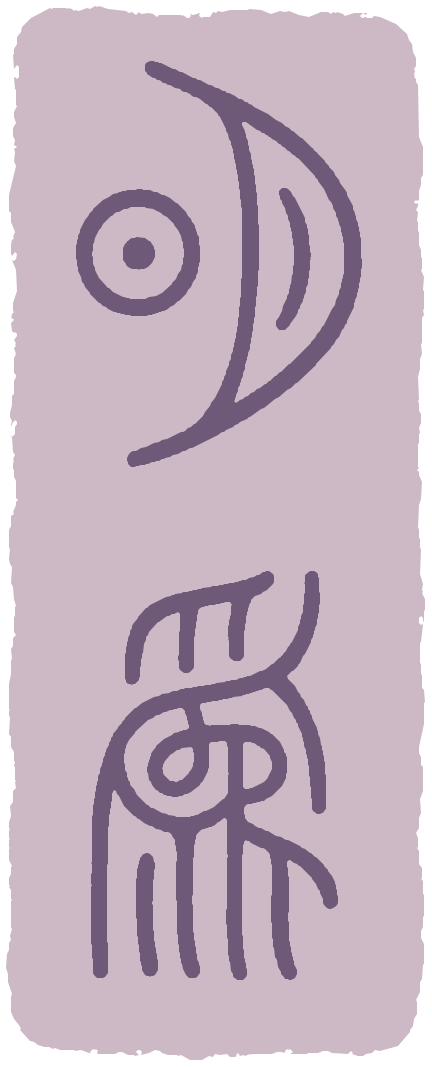
The Chinese word 道 (Tao) is often translated as ‘the Way.’ These lines can easily leave us with the feeling that the Way is simply a mystery beyond words, something too vast to be spoken of at all. But that is not quite what the Tao Te Ching tells us. It does not ask us to fall silent. It points toward the relationship between a living world and the words we use to hold it.
We can speak about the Way. We can name the river, but the water keeps moving. We can name the body, but the body keeps changing. We can name a relationship, an identity, a season of life, or a way of being, but none becomes still because we have found a word for it.
The word marks a place where life was. Life has already moved on.
We have spoken about form and name. But what of what cannot be exhausted by form or name? Chapter 1 calls the nameless the beginning of heaven and earth, and the named the mother of the ten thousand things. The nameless points toward life before it is differentiated and held through particular names. The named allows the ten thousand things to become recognizable, speakable, memorable, and known.
The chapter then turns toward two ways of encountering life: one that senses the expansiveness and profundity no appearance can exhaust, and one that traces the edge or boundary through which things become perceptible. One opens toward the boundless. The other allows us to encounter the particular.
These two are not opposites set against each other. They arise together and differ in name. They belong to one unfolding, encountered from different sides.
The boundless is not somewhere else, waiting behind the world or hidden inside us. It is the living field that always exceeds the forms, names, and boundaries through which we encounter it. A name allows us to recognize something, while the nameless reminds us that what we recognize is never exhausted by the name. A boundary gives something particularity, while the boundless reminds us that the particular is always participating in a larger field of life.
To live wisely, then, is not to abandon names but to hold them as we would hold anything alive, firmly enough to use and loosely enough to let them change. The trouble begins not when we name, but when we forget that we have named and mistake the word for the whole of what is living.
There is the Way, which cannot be exhausted by any particular route, form, or name. And there is our particular way of living. Our way takes a particular body, shape, name, history, and ongoing story. This particular way is a focus within the larger field of the Way. Its boundaries give it shape, but those same boundaries are also where it continually meets the larger field through breath, relationship, place, change, and exchange.
Taoist wisdom invites us to live with both at once: the focus and the field, the boundary and the boundless.
Qi: The Living Energy That Moves and Transforms
If form is the living particular and the boundary is where it meets the world, another question arises. What moves within these forms, between them, and through their continual transformation?
Taoist thought has a word for this living energy: qi (氣).
Qi is often translated as living energy, vital energy, or simply energy. But in Taoist thought, it is not merely a quantity stored inside a body. Qi gives us a language for the living movement through which things form, relate, change, and transform. It gathers and disperses. It rises and sinks. It moves inward and outward, within a form and between forms. Forms remain recognizable, while what moves through them is never still.
Seen through qi, the world becomes less like a collection of separate things and more like a field of movement. Forms take shape long enough to be encountered, while currents continually pass within and between them. Breath moves between body and air. Warmth passes between bodies. Food becomes nutrition, movement, heat, and waste. The presence of another person can change our breath, posture, emotion, and attention.
Nothing living is completely sealed.
This is why Taoist practice pays such close attention to relationship: body and nature, interior and exterior, movement and stillness, gathering and releasing, heaven and earth. A boundary makes each form distinct, while qi gives us a way to perceive the movements and exchanges through which forms remain in relationship.
Seen this way, the particular does not stand apart from the larger field of life. Forms arise within relationship, participate in movement, and remain open to transformation.
The boundless continually takes form. Form becomes recognizable through boundary and name. Yet neither boundary nor name can stop what is living from moving.
Before We Name the Change, Feel the Transformation
So far, we have looked at form and name, boundary and the Way, qi and the movement of life. But Taoist wisdom does not remain outside us as a way of understanding the world. At some point, the inquiry turns toward direct experience.
Transformation is not only something we observe after it has happened. We live through it while it is happening.
The body may tighten before we understand why. Energy may gather inward before the mind recognizes what is changing. Something once enlivening may begin to feel heavy. What once felt natural may slowly begin to require effort. A relationship, a rhythm, an identity, or a way of living may still carry the same outward form and name while something within it is already changing.
We tend to call it a change once it has become visible enough to name, once it has become a symptom we can diagnose, a decision we must make, or a fact we can no longer ignore. But transformation has often been moving long before that. It can sometimes be felt long before it can be explained.
This is where Taoist wisdom becomes more than philosophy. Transformation has a felt life.
The mind depends upon recognizable forms and familiar names. It knows what something has been called. It knows the story attached to it. It knows what usually happens next. Felt experience may notice something earlier. The body contracts. Breath changes. Energy gathers or scatters. We feel drawn toward something we cannot yet explain, or we begin withdrawing from something we once pursued.
These experiences do not automatically tell us what they mean. A feeling is not a command. A moment of discomfort does not necessarily mean we should leave. A sense of excitement does not necessarily mean we should follow. But felt experience carries information that can be lost when we name the change too quickly.
When we begin to recognize the change, our response is often immediate. We look away from what we would rather not see. We judge what feels unfamiliar. We resist what threatens a form or name we have grown attached to. Or we seize the change and try to force it toward an outcome we have already decided we want.
Each of these responses can cause us to meet our idea of the change before we have fully encountered the transformation itself.
Taoist practice asks something of us before reaction: stay close enough to experience the movement before deciding what the change means.
What is gathering? What is loosening? What is ending? What is trying to take another form? Where does movement arise naturally, and where are we imposing it because we cannot bear to remain with what is uncertain?
This is not passivity, and it is not counsel to follow every change wherever it leads. Discernment still matters. We establish boundaries. We protect what needs protection. We make decisions. We remain in some places and leave others.
But we cannot respond wisely to a transformation we have barely allowed ourselves to feel.
Wisdom that arrives before experience is only preference wearing the clothes of wisdom.
Our form allows us to appear. Our name allows us to be recognized. Our boundaries are where we meet the world. But none of these is the whole experience of being alive.
Perhaps this is one way to approach the Way: not by escaping form, abandoning names, or dissolving boundaries, but by living fully through them while remaining attentive to the life that continually moves beyond what any one of them can hold.
The banks give the river shape. The water keeps moving.