Where the Soy Milk Used to Be
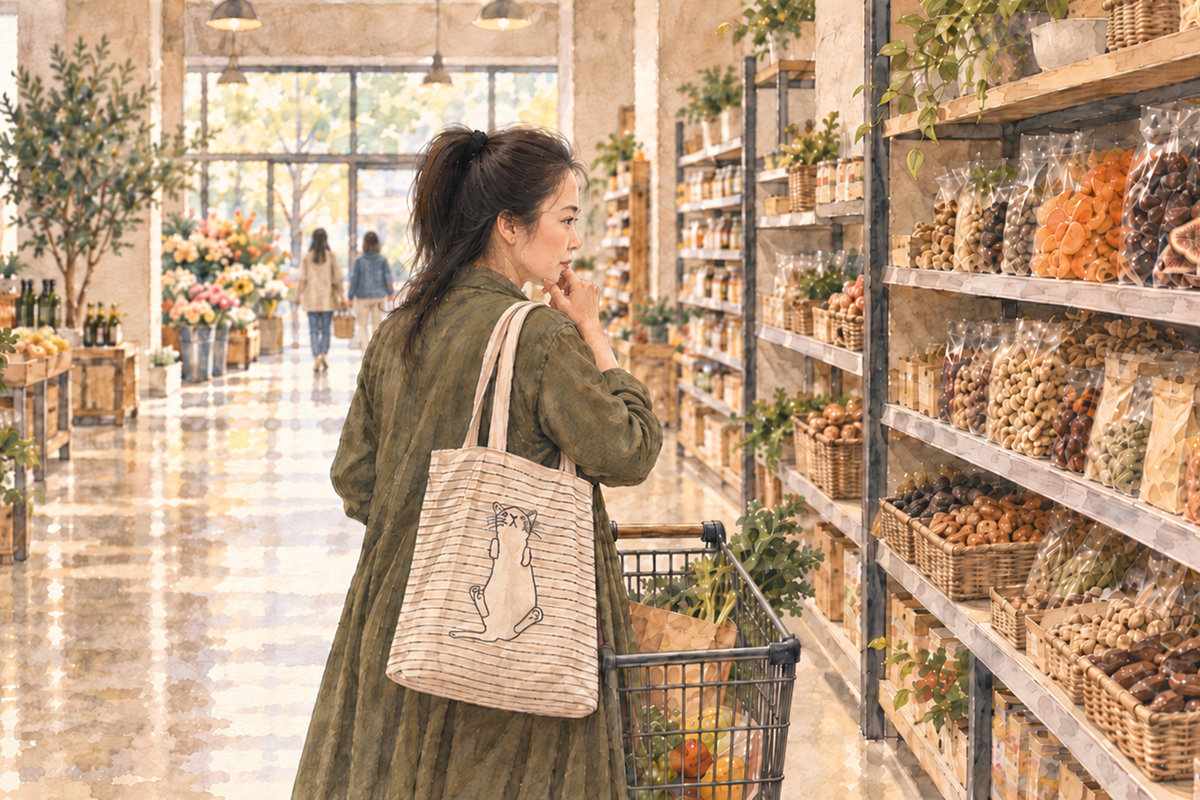
“When my soy milk disappeared from its usual shelf, my frustration revealed a small map I did not know I was carrying.”

 Dr. Ming Way
“When my soy milk disappeared from its usual shelf, my frustration revealed a small map I did not know I was carrying.”
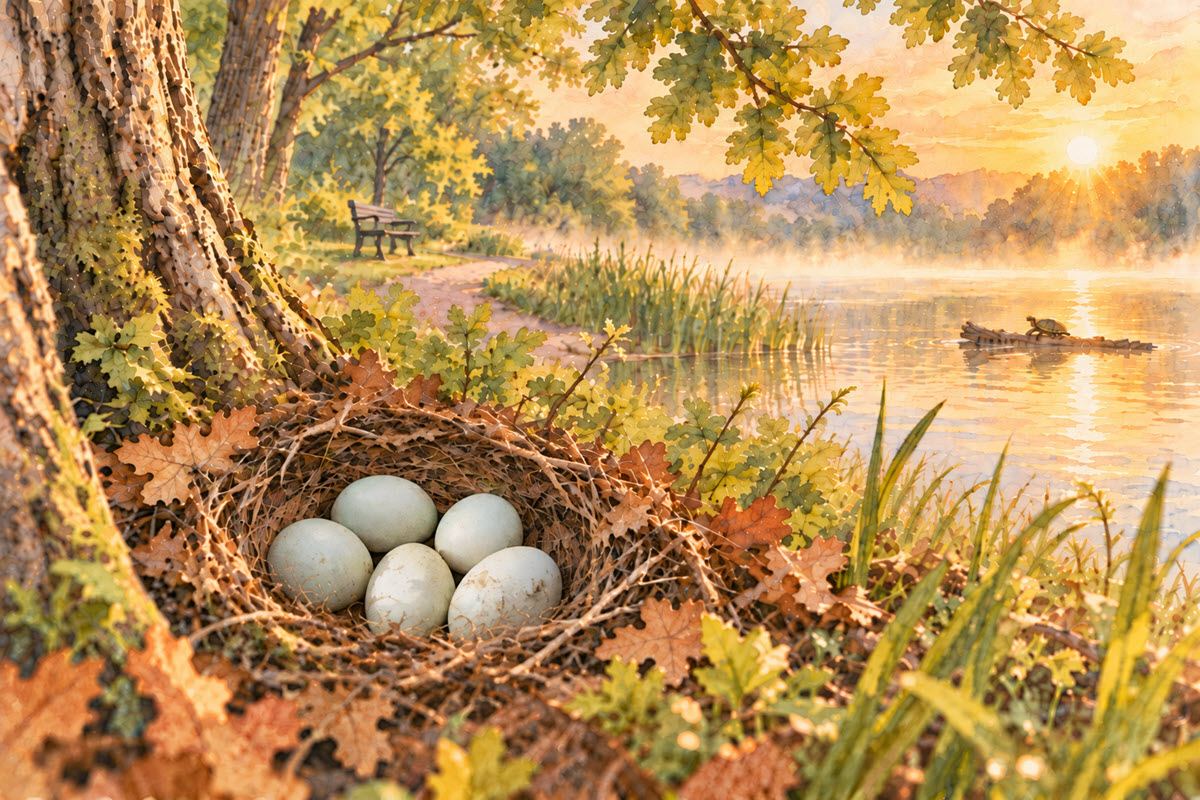
I followed the pace my left knee suggested and found myself on a different path, one I had been missing on faster mornings.
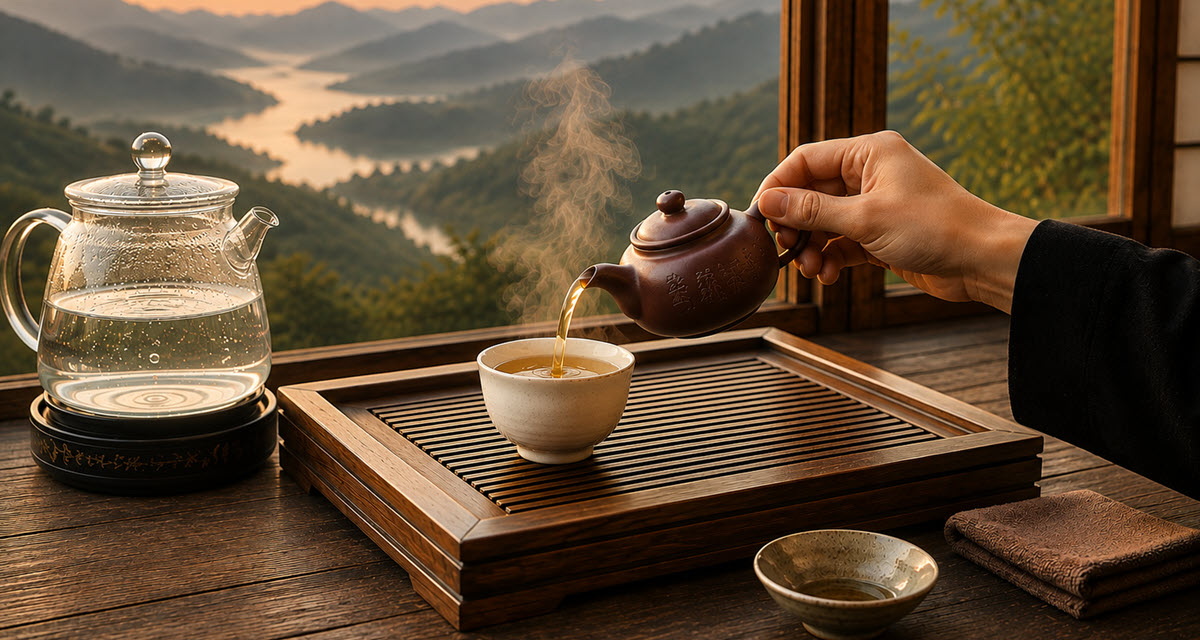
On a mountain with no coffee in sight, making tea slowly showed me what nourishment feels like when the body is asked for nothing in return.
High in the sky, a cloud drifts on the afternoon breeze.
It has traveled far, chasing the sun until the last light melts into the sea, following the moon across sleeping villages, drifting beneath the stars.
It loves changing shape as it moves, becoming a feather, a great white bird, a sailing boat, then something without a name at all.
There is always another horizon. Another valley. Another wind waiting to carry it somewhere new.
But lately, a question has begun whispering inside the cloud.
What would it feel like to simply stay?
The cloud does not know.
Clouds move. That is what clouds do.
BarKockalotte had heard many things about the Sanctuary.
Some said no one there was afraid, and no dogs were ever mean. Everyone lived happily and had everything they needed.
The more he heard, the more certain he became that he belonged there.
In the backyard, he found LeDrun meditating beneath the maple tree, sunlight resting across his shell.
“Woof. Woof,” BarKockalotte greeted.
“You know about the Sanctuary, don’t you? Tell me all about it.”
“Why?”
“So you can take me there. You are a magical tortoise.”
“You have never been there.”
“That is why I need directions.”
“Tell me what you know.”
“It is the safest, happiest, richest place in the universe.”
A master carpenter was traveling through the countryside with his apprentice when they came upon a village gathered beneath an enormous tree.
Its trunk was so wide that several people joining hands could not reach around it. Its branches twisted high above the shrine, spreading shade across the village square.
“Master, look at that marvelous tree!”
With a quiet scoff, the carpenter kept walking.
“You hardly looked.”
“I looked enough.”
“But it is enormous.”
“That does not make it good timber. The trunk is knotted. The branches twist in every direction.”
“So it is useless?”
“Completely.”
They continued on.
That night, the tree entered the carpenter’s dream.
A weary traveler arrived at a small mountain temple after a long journey. For several days, they sat quietly within its walls, searching for answers.
The master noticed, and without a word led them out through the gate. Spring had arrived in full. Wildflowers danced in the warm breeze, and below, a stream wandered through the valley, catching the light as it went. The master chose a place on the hillside and settled down, at ease, saying nothing.
Toward evening, the master rose and gestured toward the temple. But at the gate, the master stepped ahead, swung the two wooden doors shut, and left the traveler standing outside.
It was another sunset. Under an old tree by the river, the village animals gathered around an old tortoise sitting upon a smooth boulder.
“Long ago,” he began, “there was a swordsman traveling by boat through the mountains. The river was broad and green, cliffs rose on either side, and clouds drifted between their peaks. He felt joy. He rose to his feet and began to dance with his sword, the blade catching the golden sunlight.
“He stepped forward. He turned. He lifted the sword high above his head. Then, with one careless movement, the sword slipped from his hand and disappeared into the river.”
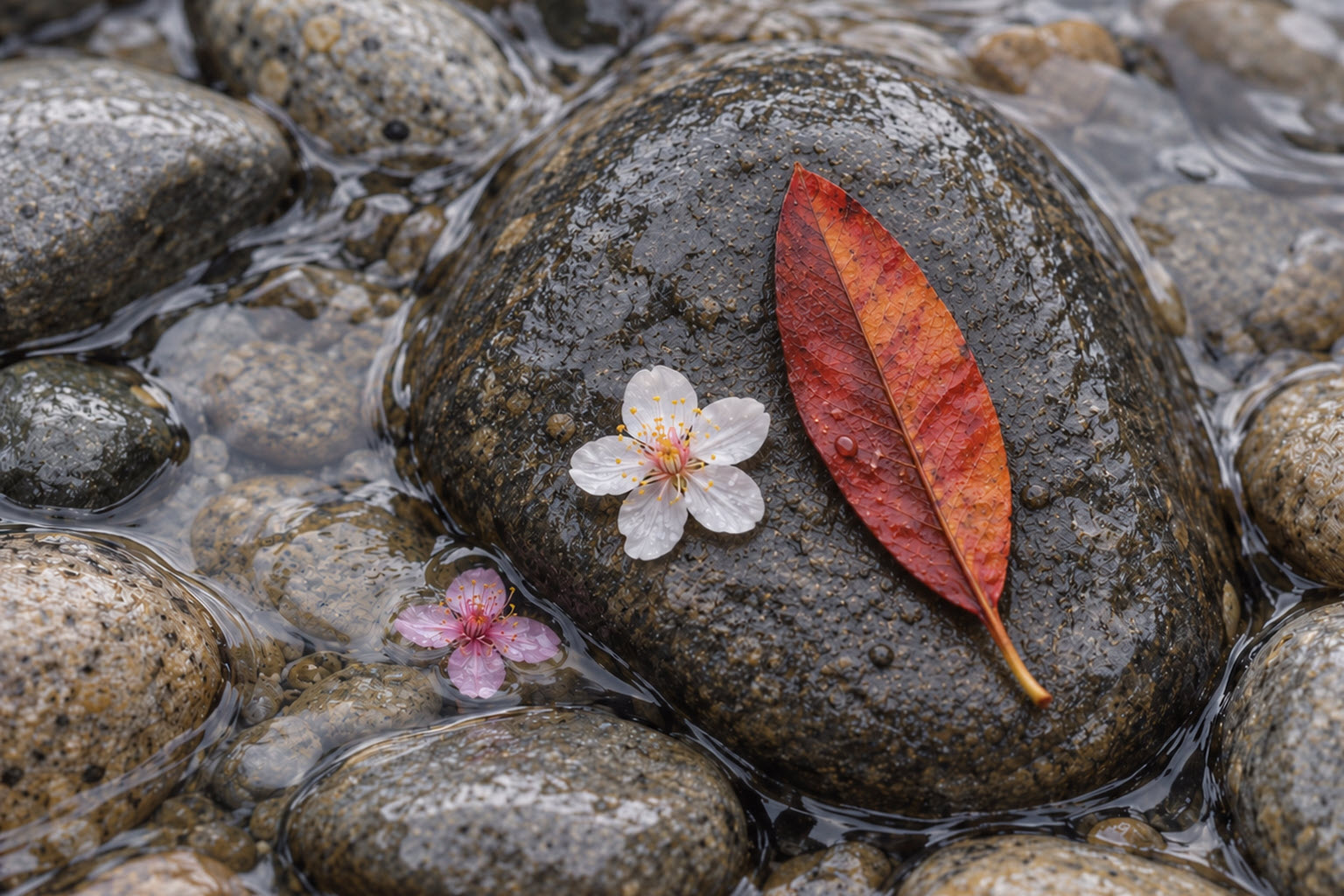
Tao Te Ching Chapter 2: “When we all see some things as beautiful, we make other things ugly. When we all see some things as good, we make other things bad.”
Naming brings a mutually arising pair into being, yet we rarely stop at difference alone: one side quietly becomes the measure by which the other is judged and pushed away.
Tao Te Ching Chapter 1: “The Way that can be spoken is not the eternal Way. The name that can be named is not the eternal name.”
Our lived experience keeps changing, yet the forms and names we give it often remain, asking permanence of what was never meant to hold still.