
About Ming Way
Ming Way is a Taoist teacher, qigong instructor, author, and the creator of SEE Meditation. Her work explores how we can live well through the changing seasons of body and life, not by resisting change, but by returning to a deeper relationship with ourselves. Her teaching reaches beyond talks and lectures, inviting inner observation, reflection, and intentional cultivation through the rhythms of everyday life. At the heart of her work is a question she has carried through many seasons of her own life: When the body and life change, what remains true within us?
Ming’s inquiry began in rural China, where she grew up in a world shaped by tradition, duty, gender roles, and strong social expectations. Childhood trauma left her with chronic anxiety, anger, and patterns of detachment and dissociation. Disconnected from the felt knowledge of her own heart and body, she came to understand herself largely through what was reflected back to her by family, culture, and society.
Seeking freedom from her family of origin and leaving her first marriage, Ming immigrated to the United States to enter the doctoral program in East Asian Studies at the University of Arizona. In this dramatic life change, much of what had once defined her began to loosen. With that opening came possibility, but also uncertainty and disorientation. As familiar roles and expectations fell away, she encountered an inner landscape that had long gone unattended.
She began learning how to reconnect with her heart and body, and how to recognize what she was actually experiencing physically, emotionally, and mentally. This was not a quick awakening or a single turning point. It became a long practice of returning. For nearly two decades, Ming devoted herself to healing and inner cultivation. Her path moved through therapy, mindfulness meditation, Zen, qigong, breathwork, somatic awareness, compassion practice, and the healing traditions of East and West. Over time, this practice also took formal shape: Ming became a certified mindfulness meditation teacher (recognized by the International Mindfulness and Meditation Alliance) and a certified qigong instructor (through the National Qigong Association).
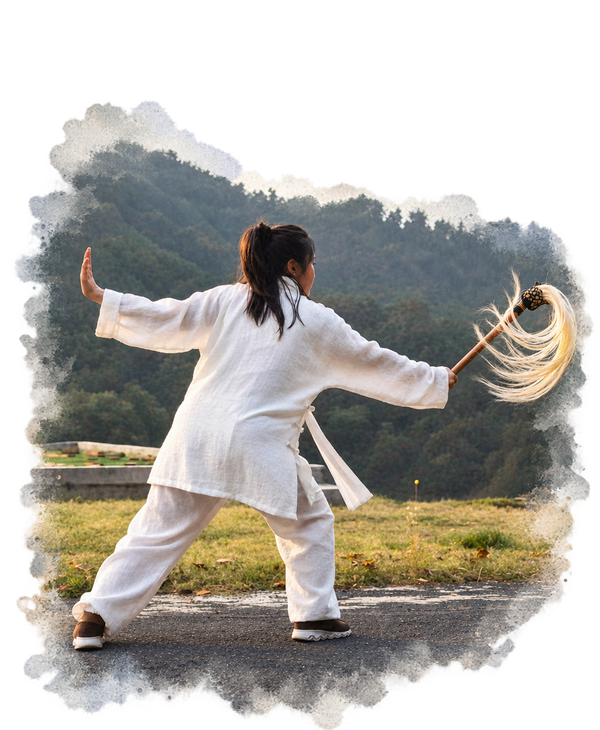
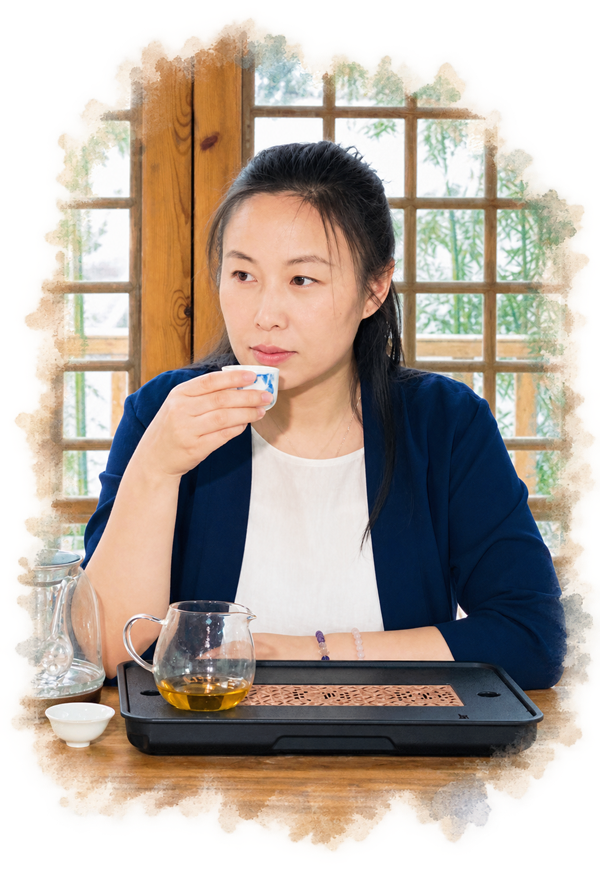
In 2017, Ming embraced Taoism as her way of life. She is not a Taoist monk or priest, but someone who seeks to live by its ancient wisdom: returning to the simplicity of one’s original nature, held in the image of pu (朴); finding balance between purposeful effort and non-forcing, or wuwei (無為); and living in an interconnected relationship with the world. She also seeks to cultivate the living energy within for vitality rather than allowing it to be drained by chronic inner strain.
Now, as Ming moves through the physical and hormonal changes of aging, she feels called to share what she has lived through, learned, and practiced, as well as what she is still living through, with others who struggle with changes in body and life and with the deeper questions of meaning these changes can awaken.
Ming holds a PhD in East Asian Studies and was trained in cultural anthropology. Her scholarship examines how culture and society shape perception, identity, and the realities people learn to inhabit. Her academic work gave her language for something she had already lived: the narratives surrounding us do not remain outside us. Over time, they can become the inner story of who we believe we are. Ming also brings the sensibility of participant observation into her teaching. In cultural anthropology, participant observation means participating in the life of a community while observing what unfolds in the field. In Ming’s work, daily life is the field.
She does not stand outside the field of body and life change and explain it from a distance. She lives within the same field she observes, paying attention to how culture becomes identity, how thought enters the body, and how small moments of awareness can alter our relationship with what is happening.
Change is the way of the field. Cultivation is the art of living.
The two are never entirely separate.
From this meeting of lived experience, scholarship, and contemplative practice, Ming created SEE Meditation, a framework rooted in Spirit (Shen), Energy (Qi), and Essence (Jing). Her wider work brings together SEE Meditation, Vitality Qigong, and Taoist wisdom in daily rhythm. She is also the cofounder of SEE Within, a mindfulness companion app for people moving through life change.
Alongside her teaching, Ming is the author of the allegorical trilogy Born Rich Learn Poor. Through animal characters and contemplative storytelling, the books explore truth, identity, society, disconnection, and the human longing to live with connection and meaning.
Stories remain an important part of her wider work because some truths are better felt than explained. They may arrive through a cup that is never filled, a deep well in a dry summer, a lantern glimmering in the snow, a weary traveler with a broken compass, or a butterfly resting on a little purple flower at dusk.
Ming shares her life with Mike and her Zen cat, Bodhi. Through the ordinary rhythms of home, writing, practice, tea, gardening, and therapeutic cooking, she continues to live, observe, reflect, and share as the seasons unfold.